Our Reconciliation Journey
Our purpose is accessible justice – to create a system, place, and space to ensure a safety net of best practice legal advice, education, and advocacy in our specialist fields. We can only authentically work to achieve this if we honestly acknowledge our history and engage in reconciliation.
Circle Green is committed to an ongoing process of reconciliation. Our Reflect Reconciliation Action Plan was an important step in formalising our reconciliation journey and establishing a foundation for ongoing action.
Through our Reflect RAP, we strengthened our understanding of Circle Green’s role in progressing reconciliation, developed relationships, and deepened our knowledge to support future reconciliation initiatives.
During our first year of operation in 2020, we placed an Acknowledgement of Country as a preamble to our Constitution. In 2021, we shared the Uluru Statement from the Heart across the organisation and registered with Reconciliation Australia to begin developing our Reflect RAP.
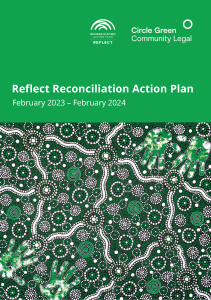
In April 2022, we established a Reconciliation Working Group (RWG), bringing together Board members and legal and non-legal staff from across the organisation to guide the development and implementation of our RAP.
Through the development and implementation of our Reflect RAP, we:
- Participated in Aboriginal and Torres Strait Islander community initiatives and events, including NAIDOC Week and National Reconciliation Week.
- Introduced an internal policy enabling employees to elect to work on the 26 January public holiday in lieu of an alternative date.
- Provided staff and volunteers with cultural awareness and Acknowledgement of Country training.
- Embedded Aboriginal and Torres Strait Islander Cultural Awareness training into staff and volunteer induction.
- Strengthened the use of Acknowledgements of Country and Welcome to Country across Circle Green meetings, training, and events.
Continuing our reconciliation journey
Our reconciliation work has continued beyond the formal period of our Reflect RAP.
Our Reconciliation Working Group provides an ongoing space for reflection, learning, and action, supported by First Nations cultural knowledge and guidance. We continue to participate in reconciliation initiatives and create opportunities for staff to deepen their understanding of Aboriginal and Torres Strait Islander cultures, histories, and experiences.
Our activities have included participation in National Reconciliation Week and NAIDOC Week, cultural learning and immersion opportunities, the Walk for Reconciliation, and support for Reconciliation WA’s Street Banner Project.
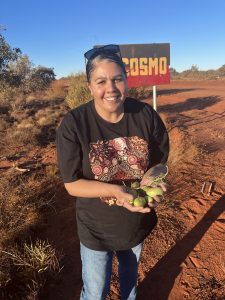
We have also commissioned several artworks from Rosie Paine, a Yilka, Wongutha, Noongar, and Yamatji artist living on Noongar Country, to represent Circle Green’s vision and values. These works provide an important visual expression of our connection to community, Country, and our ongoing reconciliation journey.
Circle Green remains committed to listening, learning, strengthening relationships, and taking meaningful action as our reconciliation journey continues.
Artwork
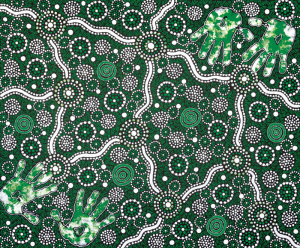
‘Our Connections’
Melissa Spillman (Woods), 2020
Acrylic on canvas
Travelling through our country, meeting new family members, making new connections. At gatherings, sharing and telling our stories to one another. Keeping our culture strong and respected.
About the artist:
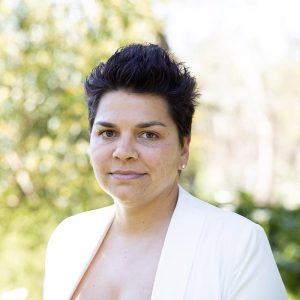
Mel is a Noongar Aboriginal artist based in Western Australia, with family heritage from Gnowangerup on Goreng Country in the south-west of WA.
Raised away from her Aboriginal heritage, Mel is deeply passionate about sharing culture and keeping it alive. Through workshops in schools and storytelling through art, she works to inspire younger generations and foster connection to culture and Country.
Mel founded her business, Maarakool Art, in July 2021. Her work includes facilitating workshops, painting murals, and undertaking corporate commissions and licensing projects.

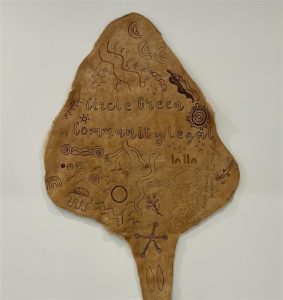
‘Yongka Skin’
Circle Green Staff Collaboration – Cultural Immersion Day, 2025
Burnt Etchings on Kangaroo Skin
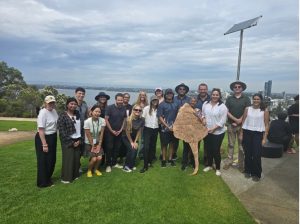
In February 2025 staff across Circle Green engaged in a number of reconciliation activities, with a highlight being the Cultural Immersion Day led by Dooga Waalitj Healing. This powerful experience brought together team members from across the organisation to deepen our understanding of Aboriginal culture, history, and connection to boodja (country). At the end of the day, our team collaborated to create a collective artwork. Etched into a yongka (kangaroo) skin, team members chose symbols representing:
- Emu, kangaroo, and djiti-djiti (willie wagtail) tracks – journeys, resilience, and connection to Country.
- People dancing and sitting together – community and celebration (clients after receiving support).
- The river – our connection to Derbarl Yerrigan (Swan River) and the importance of place.
- Elders – wisdom, guidance, and cultural leadership.
This unique piece reflects our shared learnings, respect, and commitment to reconciliation. More than just a work of art, it serves as a tangible reminder of our journey and the responsibilities we carry forward. It now hangs proudly in our foyer, symbolising our services and our commitment to community – interconnected and working together.
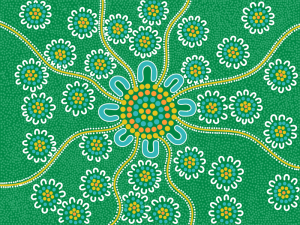
‘Dandjoo koorliny, dandjoo waangkaniny, dandjoo kaadadjiny’
(Walking together, talking together, learning together)
Rosie Paine, 2024
Acrylic on canvas
The large, dotted circle at the centre represents Circle Green Community Legal, a meeting place. The U shapes around this highlight this as a place where people come together with respect, equity, collaboration and education. The gold wavy lines, with white dots, leading out from the central image represents the connection of Circle Green with other stakeholders (people, businesses, community). The smaller meeting places throughout the design, represent people coming together and the legal and cultural change influenced by Circle Green Community Legal.
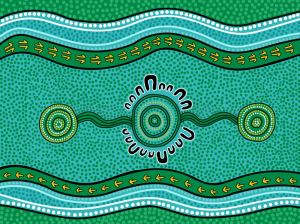
‘Nodjam Dordong’ (Circle Green)
Rosie Paine, 2025
Acrylic on canvas
Nodjam Dordong takes inspiration from the spirit of connection and storytelling reflected in the collaborative creation of the Yongka Skin. The artwork represents Circle Green’s vision of empowered people thriving in a just society.
The central image represents people coming together and being empowered. The lines leading out from each side of the central image represent people thriving, connecting, and contributing. The dotted circles that these lines join represent this connection out to the wider community embracing the value of fairness.
The teal and white lines across the top and bottom of the artwork serve as Acknowledgement of Country, and the significance of place, to the Derbarl Yerrigan (Swan River) and Noongar Boodja (Country). The emu and kangaroo tracks at the top and bottom of the artwork represent the importance of journey and resilience.
About the artist:
Rosie is a Yilka, Wongutha, Noongar and Yamatji artist living on Noongar Country. She grew up in Cosmo Newberry Aboriginal Community and Laverton, Western Australia. Rosie has spent most of her life as a primary school teacher and is currently a Deputy Principal at a public school in Perth. She is a proud mother of two and runs her own small business, Rosie Made.